 blog
blog
After School Aerial Programs: Worth It for Kids?
Table of Contents
- What After School Aerial Programs Actually Involve
- The Benefits of Aerial for Kids: Strength, Focus, and Confidence
- How Long Does It Take to Learn Aerial Hammock?
- Choosing an Aerial Studio for Children: What Parents Should Check
- Cost vs. Traditional After School Sports: Is Aerial Training Worth the Premium?
- Injury Prevention and Biomechanics
- Conclusion: Making the Right Choice for Your Child
- Frequently Asked Questions
Last Updated: September 23, 2026
What After School Aerial Programs Actually Involve
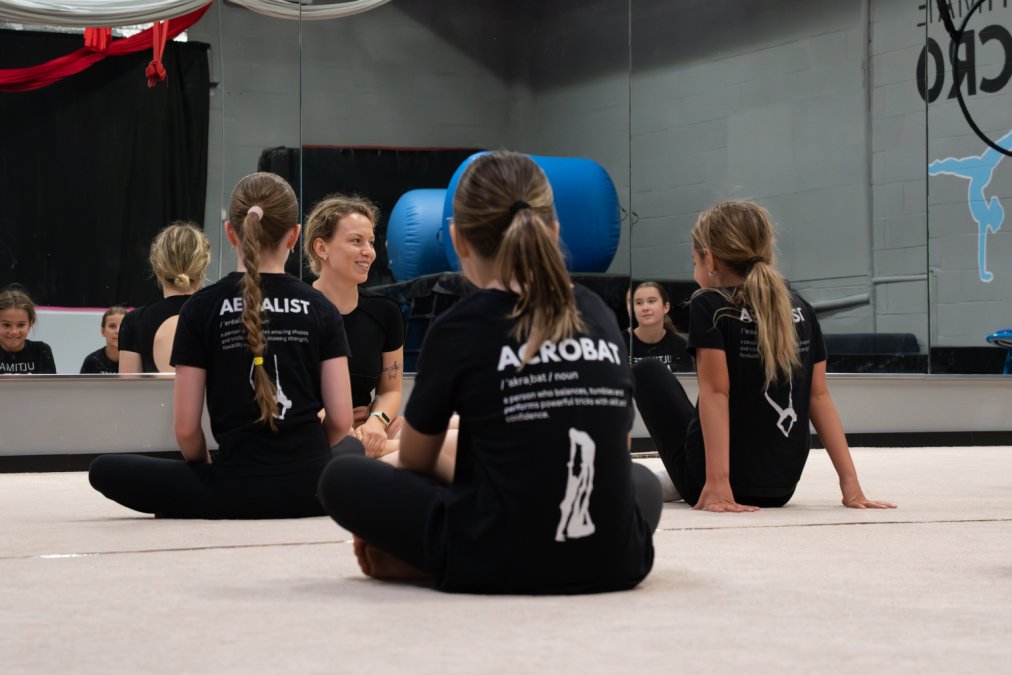
After school aerial programs are structured classes where children learn acrobatics and aerial sport using equipment like hammocks, straps, and hoops. These programs combine physical training with performance skills in a supervised studio setting.
At Ultimate ACRO, parents often ask if after school aerial programs are worth the time and money. The answer depends on what you want your child to gain.
A typical session starts with a warm-up. Kids stretch, do conditioning drills, and practice on the floor. Then they move to the equipment.
Beginner classes usually cover:
- Basic floor acrobatics
- Simple poses on aerial hammocks
- Balance work on hoops
- Safe landing techniques
- Partner spotting basics
Each class runs 60 to 120 minutes. Small group instruction keeps things safe.
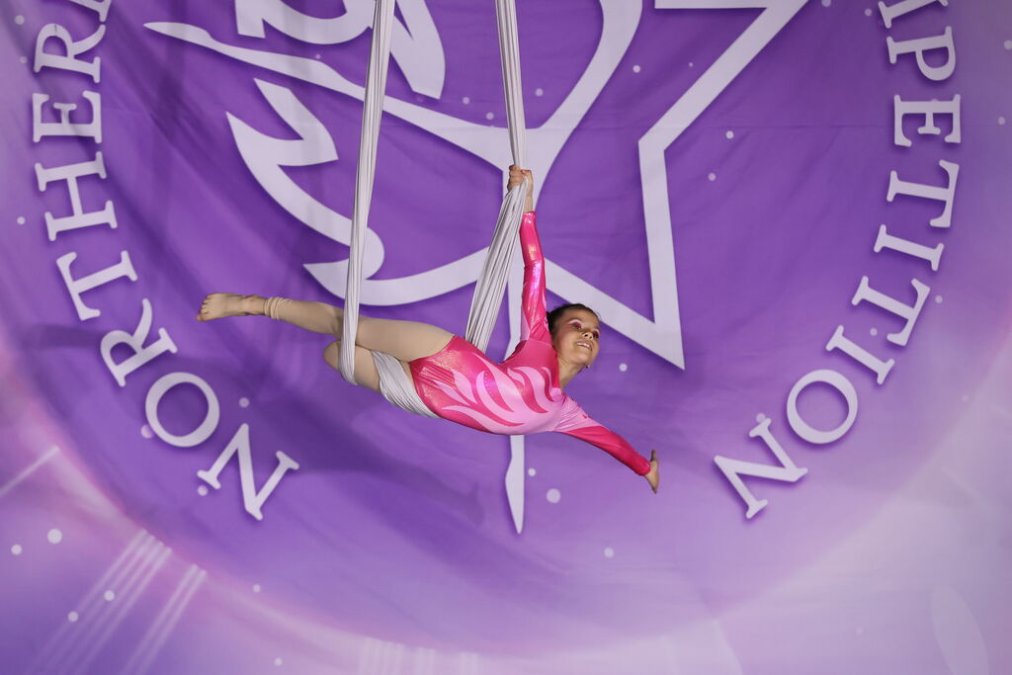
An aerial athlete from Ultimate ACRO performs a beginner pose on an aerial hammock during a competition in London, Ontario.
The Benefits of Aerial for Kids: Strength, Focus, and Confidence
This sport builds core strength, improves flexibility, and sharpens focus through mental stimulation. Children also gain confidence as they master new skills.
Physical Development: Core Strength, Flexibility, and Body Awareness
Aerial training works muscles that regular sports often miss. Hanging from equipment requires grip strength, shoulder stability, and a strong core.
Kids develop:
- Better coordination and balance
- Improved flexibility through controlled stretching
- Stronger proprioception, which is the body's sense of position in space
- Greater endurance over time
Mental and Social Gains: Confidence, Focus, and Community
The mental benefits matter just as much. Learning a new skill on aerial equipment takes patience. Kids fall, try again, and eventually succeed.
That process builds resilience. It also builds confidence.
How Long Does It Take to Learn Aerial Hammock?
Most beginners learn basic entrances and poses within 4 to 8 weeks of consistent practice. Mastering more advanced moves like inversions and drops takes 6 to 12 months or longer.
Progress depends on a few things:
- How often your child practices
- Their starting strength and flexibility
- The quality of instruction
- Their comfort with heights
Choosing an Aerial Studio for Children: What Parents Should Check
Choosing an aerial studio for children requires checking three things: instructor certification, rigging safety, and class size. These factors protect your child and ensure real skill development.
Look for:
- Crash pads and professional mats under all equipment
- Documented equipment inspection schedules
- First aid certification among staff
- Clear drop safety and spotting protocols
- Small class sizes with hands-on coaching
Cost vs. Traditional After School Sports: Is Aerial Training Worth the Premium?
Aerial training can have a different pricing structure than community soccer or basketball. A comprehensive comparison involves looking at the full cost of a traditional season versus the all-in cost of an aerial program.
Where the money actually goes
Aerial program fees often cover aspects that traditional sports may handle differently:
- Coaching ratio. Aerial classes typically run 8 to 12 students with per instructor. That is a much lower ratio than a volunteer-coached house-league soccer team of 16 to 25 kids.
- Equipment and rigging. Silks, lyra hoops, and hammocks are inspected, replaced, and re-rigged on a schedule. Studios also carry liability insurance specific to aerial work, which is more expensive than general youth-sport coverage.
- Facility overhead. Aerial studios need height clearance, professionally engineered rigging equipment, and thick crash mats, costs a school gym or community field does not carry.
What parents actually pay for traditional sports
Registration fees for some community sports may differ from aerial tuition, but additional costs can accumulate:
- Uniforms, cleats, shin guards, or dance shoes
- Tournament or recital fees
- Travel and gas for away games
- Fundraising commitments
- Private lessons once a child wants to advance
A realistic comparison table
Factor | Aerial Programs | Traditional Team Sports |
|---|---|---|
Upfront registration | Higher | Lower |
Equipment cost to family | Low (studio-provided) | Moderate to high (varies by sport) |
Class size | Small to medium, capped | Often larger |
Skill focus | Individual progression | Team-based |
Physical demands | Core, grip, flexibility, shoulder stability | Running, endurance, sport-specific |
Progress tracking | Structured levels and syllabus | Varies by league and coach |
Injury profile | Low with proper spotting and progression | Sport-dependent; contact sports higher |
Injury Prevention and Biomechanics
What aerial work actually loads
Hanging, climbing, and inverting put demand on specific structures:
- Grip and forearm. Silks and hoop work require sustained grip strength. Coaches build this gradually so tendons and forearms adapt before load increases.
- Shoulders and scapular control. Hanging from a bar or silk asks the shoulder to stabilize the whole body. Good programs teach scapular engagement before progressing to one-arm or dynamic moves.
- Core and hip flexors. Inversions and holds depend on deep core control, not just abdominal strength. Coaches cue breathing and pelvic positioning to avoid lower-back strain.
- Spine and neck. Drops and rolls are taught in progression, with spotting, so the spine is never loaded before the athlete can control the position.
Why progression matters more than talent
Aerial injuries in youth programs are most often linked to skipping levels, not to the sport itself. A structured syllabus, where a child must demonstrate a climb, a controlled descent, and a safe dismount before learning a drop, is the single biggest protective factor.
Key prevention practices in a well-run studio:
- Warm-up that raises tissue temperature before any hanging work
- Grip and shoulder conditioning built into every class
- Crash mats under every apparatus during new skills
- Spotting on all first attempts of a new move
- Clear rules about stopping when tired, dizzy, or in pain
- Cool-down and stretching to protect flexibility gains
Conclusion: Making the Right Choice for Your Child
Every child is different. Some thrive in team sports. Others need a space where they can build strength and confidence at their own pace.
Frequently Asked Questions
What are the disadvantages of aerial programs for kids?
Aerial programs require a baseline of upper body and core strength, so some children may find the first few weeks challenging. There is also a risk of minor bruising or skin irritation from equipment, and classes typically cost more than standard recreational sports. However, reputable studios manage these issues with progressive skill building, proper spotting techniques, and small group instruction. The key is choosing a program with certified instructors and a structured syllabus that matches your child's age and experience level.
How long does it take to get good at aerial?
Most beginners see noticeable improvement in basic entrances, poses, and inversions within 8 to 12 weeks of consistent once or twice weekly practice. Achieving intermediate-level sequences, such as drop safety and multi-move transitions, typically takes 6 to 12 months. Progression depends on class frequency, physical conditioning, and the studio's syllabus structure. Children who attend after school aerial programs two to three times per week often advance faster than those attending once weekly.
Is prior athletic experience necessary for starting aerial silks?
No. Beginner-friendly aerial programs are designed for children with no gymnastics or dance background. Instructors start with foundational techniques, grip strength, and body awareness before introducing inversions or drops. What matters more is consistency and a willingness to try. Studios that offer small group instruction and leveled progression help new students build coordination and endurance at their own pace without feeling behind.
What should parents look for in a safe and reputable aerial studio?
Check for instructor certification in aerial arts or acrobatics, documented rigging safety inspections, and the use of crash pads and professional mats. Ask about student-to-instructor ratios, spotting techniques, and whether the studio follows a structured syllabus with clear progression levels.